If you have solar panels, battery storage and an electric car, you’ll want them to work well together. Without the right setup, plugging in your car can use stored energy that would be more beneficial being used for your home.
This can be particularly frustrating when you’ve scheduled your EV to charge using cheaper overnight electricity from the National Grid.
To avoid and force battery storage devices to ‘not see’ the EV charger, homeowners should introduce battery blinding.
As energy and EV charging experts, we thought we’d break down what battery blinding is and how it could help you improve energy-efficiency in your home.
Why does an EV charger drain a home solar battery?
During daylight hours, your solar panels can supply electricity to your home. If you have a battery, any surplus energy generated is stored here, provided it has capacity available.
This home battery will then use its energy when it detects electricity demand from the property that exceeds current output from the solar panels.
Unless the system is configured in a specific way, it may treat your EV charger just like any other household appliance. This means when you plug in your car at night, the battery will respond by supplying the electricity needed to charge it.
If your energy providers offer a reduced night time EV charging rate, this process can be wasteful.
What are night time EV charging tariffs?
EV electricity tariffs can offer lower prices during set overnight hours, helping drivers reduce the cost of charging at home.
For example, Octopus Energy’s Intelligent Octopus Go tariff has an overnight off-peak window from 11.30pm to 5.30am, offering a reduced rate of 6.5p/kWh.
Given the money that can be saved utilising energy provider tariffs, battery blinding can be a priority to consider when making an investment into a home EV charger and solar battery storage.
How to stop an EV charger using a solar battery?
To prevent your solar battery from using its stored energy on your EV, the battery system’s monitoring must be rearranged so it doesn’t detect the EV charger as household demand.
This process is called battery blinding.
What is battery blinding?
‘Blinding’ a home solar battery from an EV charger means adjusting your battery storage system so it cannot ‘see’ the electric vehicle’s high power demand
In a suitable installation, changing the monitoring arrangement allows the battery to respond to household demand while excluding the charger.
As a result, the stored energy can be kept for your home when needed while your electric car can use cheaper night time grid electricity instead!
How does solar battery blinding work?
There are several ways that battery blinding can be achieved:
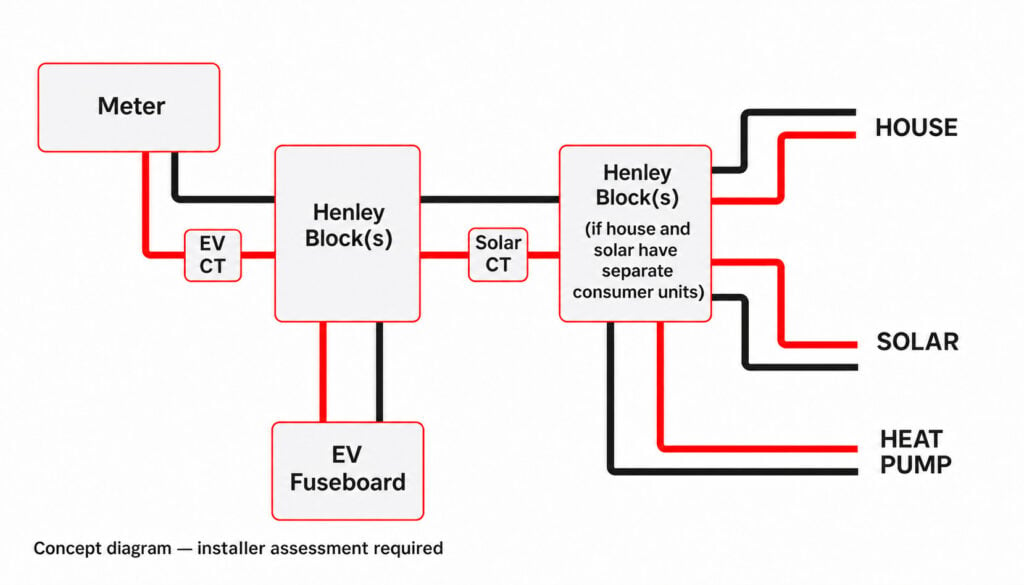
CT Clamp Repositioning: The most common physical fix involves moving or reconfiguring the battery or grid CT (Current Transformer) clamps. This is carried out as CT clamps measure electricity flow and often cannot differentiate the 7 kW+ load of an EV from a normal household appliance.
By relocating where the system measures current, the battery’s monitoring sensor is placed downstream of the EV charger feed.
Selective Load Monitoring: This configures the battery to only measure and respond to genuine household loads (like your fridge, lights, or kettle) rather than the EV charger pulling power.
Dedicated EV Feed: In some installations, an electrician can split the supply using Henley blocks, creating separate branches for the EV charger and the house.
Any wiring or CT changes should be assessed and carried out by a qualified electrician. If you need to discuss battery blinding further and how you can make better use of your household energy, Redhill Services can help.
Could battery settings solve the problem instead?
Sometimes, suitable battery controls can prevent discharge during EV charging without changing the wiring.
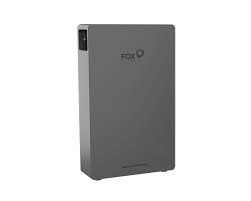
For example, Fox ESS battery systems, available through Redhill Services, offer scheduling controls on compatible installations through the FoxCloud app. These allow different operating modes at set times, meaning you can set it not discharge energy during night time tariff periods.
Some chargers also offer battery-aware solar charging settings, although these may behave differently during scheduled grid charging or boost modes.
Planning to install an EV charger alongside battery storage?
Whether you’re adding a charger to an existing solar installation or installing battery storage later, it helps to plan how everything will work together.
Tell your installer what matters to you: preserving battery energy for the evening, using cheaper overnight electricity, charging from surplus solar or a combination of everything..
At Redhill Services, we install EV chargers, solar panels and battery storage for homes across Norwich, Norfolk and Suffolk. We’ll discuss your equipment, electricity tariff and charging habits to help identify a setup that suits your home.